


Divorce attorney SEO has a profound impact on your marketing. When someone searches for a divorce attorney, they’re not casually browsing. They’re navigating an emotional and life-changing decision. And that’s where SEO can make or break your chances of being found in those searches.
Providing the answers they need when they’re searching is how you earn trust and credibility.
That means your law firm’s SEO strategy needs to go beyond keywords. It must reflect empathy, build confidence, and ensure you appear at the exact moment someone is ready to take the next step.
In this post, you’ll learn:
- How to target niche divorce-related keywords
- What works best in local SEO for family law firms
- How empathetic content builds trust and converts
- How to showcase credibility with E-E-A-T factors
- Why smart PR and backlinks matter for SEO
- How AI can fast-track and automate your efforts
Divorce Attorney SEO Starts With Niche Keywords
Keyword targeting is what makes or breaks an SEO strategy.
Broad keywords like “divorce lawyer” are often too generic, competitive, and expensive to yield the best results. They tend to attract a wide range of searches, from casual information seekers to individuals who are not yet ready to hire.
A more effective family law SEO strategy focuses on niche, high-intent keywords that align closely with a potential client’s identity or legal concern. These things matter most to them at this moment.
Audience-specific keywords
When you speak to everyone, you speak to no one. This is a known adage in marketing hinting at the importance of targeting a specific audience. The same applies to your firm.
Think about the types of audience segments you’re best at representing and bolster those with matching keywords. For example, there are keywords like:
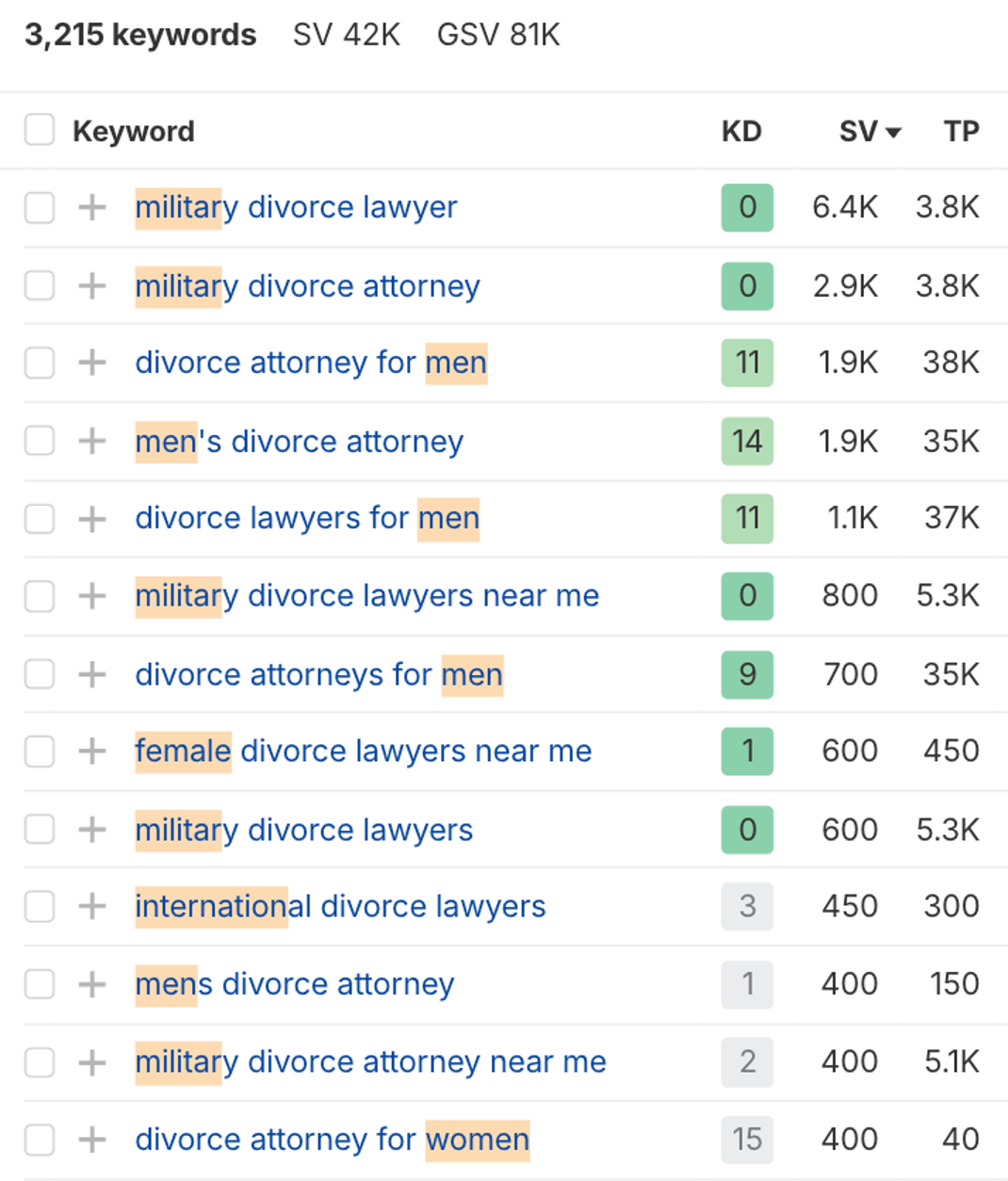
In the US, there are over 3,000 keywords for divorce attorneys who specialize in working with specific audience demographics like women, men, military or international clients.
These get searched over 42,000 times a month, and by targeting the ones specific to your practice, your best matches will more easily find you.
The benefit of niching down is that you can present yourself as a specialist in one area, which can earn you more trust compared to a general practice firm that does a bit of everything.
Specific divorce concerns
Another way people search for divorce attorneys is by the issue they’re dealing with, like:
- Child custody battles
- Family violence
- Estate protection
- Immigration complications
These searches typically carry stronger urgency and clearer hiring intent.
By targeting keywords like “child custody lawyer near me” or “family violence attorney,” you connect with clients looking for exactly what you offer.
Use Local SEO to Rank as a “Divorce Attorney Near Me”
Most divorce-related searches are hyper-local. When someone types “divorce attorney near me” or “child custody lawyer in Austin,” they’re not looking for general information; they’re ready to speak with someone nearby who can assist.
In the US, over 15,000 queries for local divorce attorneys are searched on Google more than 560,000 times a month.
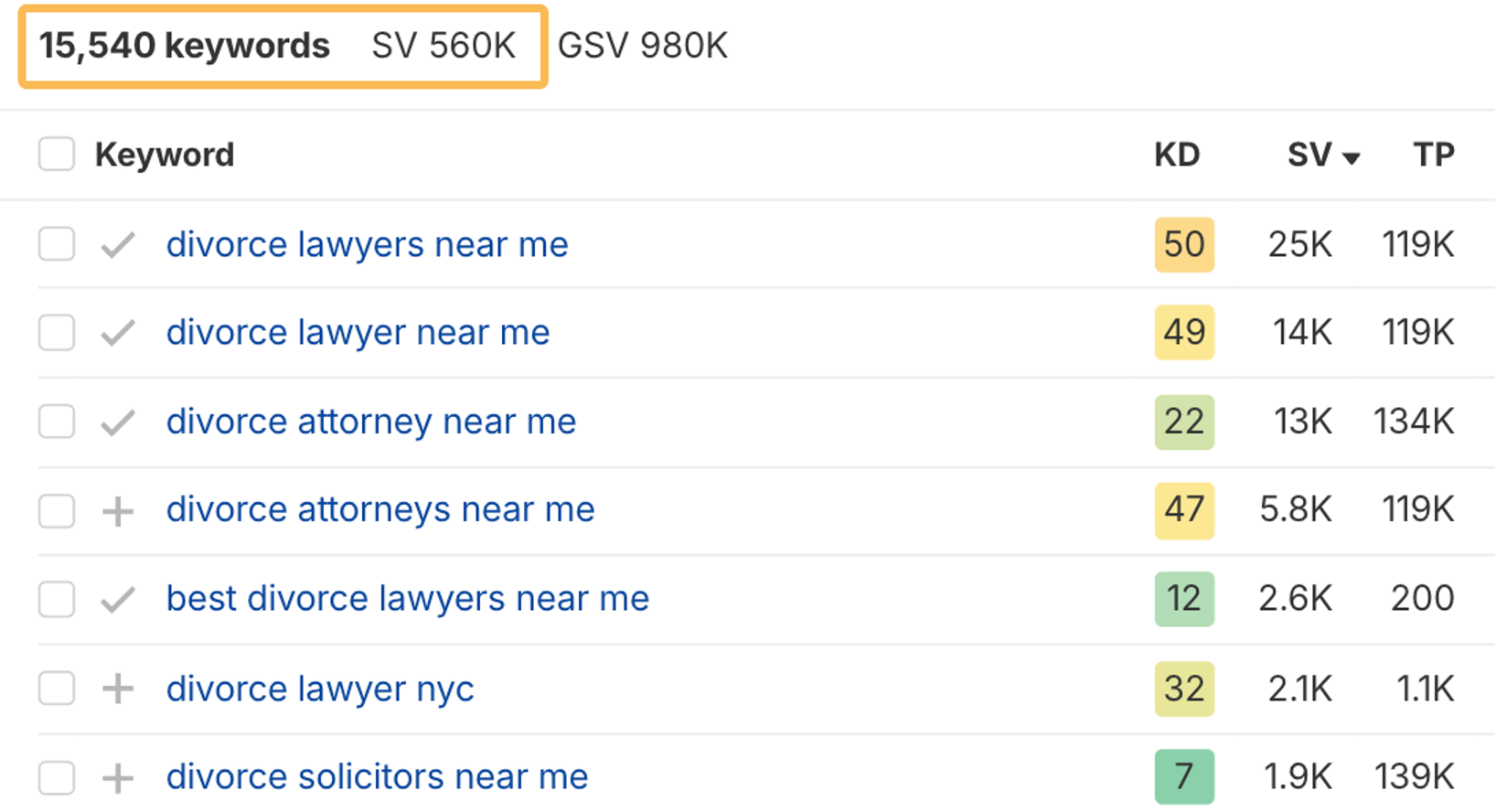
That’s why local SEO is one of the most important parts of a divorce attorney’s digital strategy.
To compete in local results, your firm needs more than a website. Google looks at several signals to determine whether you’re the best local option:
- Your business profile
- Consistency across directories
- Location relevance
- Number and quality of your reviews
A strong local SEO foundation starts with a complete and optimized Google Business Profile, including accurate contact details, service categories, hours, and compelling photos that make your firm feel approachable.
Publishing location-specific content on your website also helps.
For example, pages that mention local laws or processes (like divorce timelines or custody arrangements in your city) signal relevance to both searchers and search engines.
Build Trust With Helpful, Empathetic Content Marketing
Divorce clients are often looking beyond legal facts. They need reassurance, clarity, and practical next steps, which your firm’s content marketing can deliver.
That’s why the most effective approach isn’t just educational, it’s also empathetic.
A thoughtful content strategy helps your firm appear in organic search results while also providing support to potential clients during an emotionally challenging time. Here are common content formats that get featured prominently in search results:
Blog posts that solve real problems
Well-written blog posts can rank for long-tail queries and capture searchers who are looking for answers to specific problems.
Avoid dry legal definitions. Instead, focus on situational content like “How to file for divorce if your spouse is missing” or “Can I keep my inheritance during divorce?”
This type of content performs well in both Google and ChatGPT, especially when written in plain language and offers clear next steps. It can be tempting to share detailed legal information, but that’s hard for many people to understand (especially when reading online).
So, aim to keep your content at an 8th-grade reading level, with a warm, empathetic, and inviting tone that connects to your reader’s emotional state.
FAQs that address emotional concerns
FAQ content allows you to address the real-world concerns clients may be hesitant to ask aloud.
Answering questions like “Do I have to go to court for my divorce?” or “Can I lose custody over mental health issues?” shows empathy and builds credibility.
Structured properly, these snippets can also win featured results in Google’s People Also Ask section:

Videos that build a personal connection
Video adds a human layer that blog posts can’t.
Even a simple video filmed on your phone, answering a common question, can make someone feel more at ease reaching out. You can also share relatable stories and generalized client journeys to show potential clients what the process is like.
Talk directly to the camera, explain concepts in clear terms, and show the personality of your practice. You don’t need fancy production, just helpful, reassuring information from a trustworthy face.
Make sure to publish these on YouTube and your active social media channels. YouTube videos, in particular, often show up in Google results too:
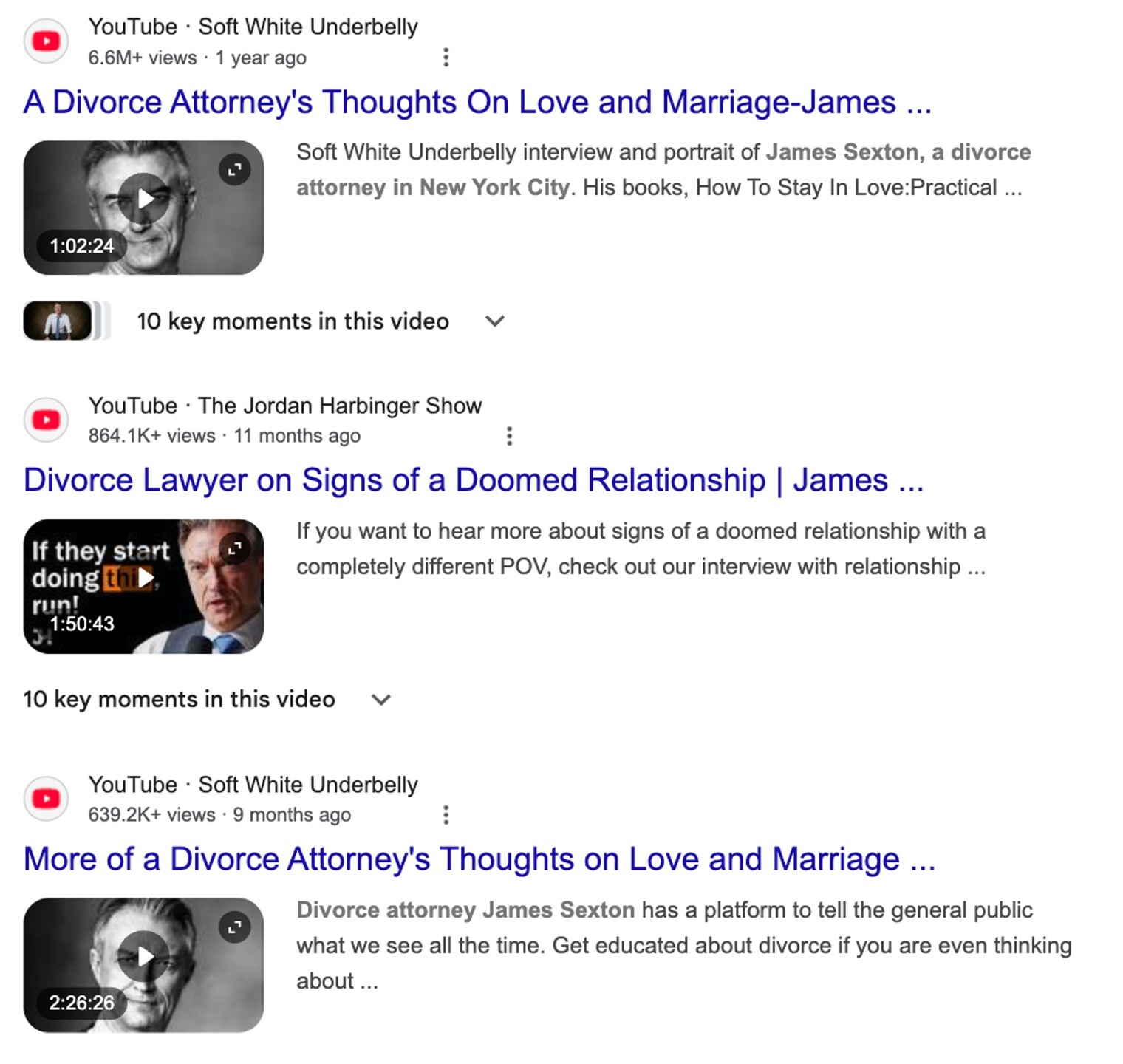
They can capture more attention than the plain text results, earning you more visibility and clicks.
Short-form clips that provide quick insights
For those who prefer fast, digestible content, short-form videos on platforms like TikTok, Instagram Reels, or YouTube Shorts can extend your reach.
Focus on one question per clip, keeping your answer to 30–60 seconds if possible. Use captions, and stay calm and professional in your tone so your viewers get a feeling of calming reassurance.
These videos often get shared or saved by people who aren’t ready to call a lawyer yet, but will be soon. It’s how they feel about which lawyer will be the best fit for their needs, and it’s your chance to show your firm’s personality.
Some people resonate with aggressive lawyers who will fight to the bone. Others prefer a more amicable resolution. Whatever your legal style is, make sure you reflect it in your videos.
By meeting potential clients in the formats they already engage with, you earn their attention and their trust before they ever pick up the phone.
Show Clients They Can Trust You
In family law, trust is critical. Your clients are choosing an advocate to help protect their kids, assets, reputation, and future.
That’s why Google (and your potential clients) look for strong credibility signals before giving you their trust or their clicks.
Google evaluates your website’s E-E-A-T to determine its trustworthiness and authority. This framework is about how well you demonstrate the following online:
- Your expertise
- Your experience
- Your authority
- Your trustworthiness
The key term here is online. When it comes to SEO for lawyers, your online presence is all that potential clients have to go by. They make snap judgments based on what they see on your site, your local profiles, and even your social media presence.
The good news? You don’t need to guess what works.
Clear indicators of experience and trust make a big difference. Your attorney’s bios should include credentials, years in practice, and relevant specializations, such as custody, asset division, or mediation.
Client testimonials should feel authentic and, whenever possible, reference specific outcomes or areas of support.
Include trust-building elements like local awards, bar association badges, media mentions, and links to community involvement. Make it easy for someone to feel like your firm is credible, compassionate, and capable of handling a sensitive case, because that’s what they’re looking for.
Earn Authority With Strategic PR and Link Building
Backlinks (links from other websites to yours) remain one of the most powerful ranking signals in SEO.
But for family law firms, it’s not just about quantity. The most valuable links come from relevant, trustworthy sources that reinforce your authority in the eyes of both Google and potential clients.
That’s where public relations and community visibility play a role. Divorce attorneys who regularly contribute legal insights to local news outlets or niche blogs naturally earn links back to their site. These mentions build your online reputation, strengthen your E-E-A-T signals, and often lead to referral traffic from people who’ve already seen your name in a trusted setting.
You don’t need to chase big national media.
The best PR opportunities for lawyers often arise from being where your community already is: local parenting blogs, legal Q&A podcasts, or regional publications that cover family law trends.
Strong link-building opportunities for divorce lawyers include:
- Contributing quotes or guest articles to local news stories
- Partnering with therapists, mediators, or family counselors for blog collaborations
- Sponsoring local events or nonprofits related to family support
- Participating in expert panels, webinars, or podcast interviews
With the right outreach, your name becomes familiar (and trustworthy) before someone even hits your website.
Automate Your Divorce Attorney SEO Strategy With FirmPilot
Everything we’ve covered (from keyword targeting and local SEO to content creation and link building) works best when it’s consistent, strategic, and backed by data.
But keeping up with it is overwhelming for most divorce attorneys. That’s where FirmPilot comes in.
FirmPilot is an AI-powered marketing platform built specifically for law firms. It helps you attract more qualified leads by automating the work that drives results, eliminating guesswork and hours of manual effort.
Our platform works by finding the right keywords based on what your potential clients are searching for. It writes empathetic, SEO-friendly content tailored to your practice area. It keeps your Google Business Profile up to date, monitors reviews, and identifies quality link opportunities.
And importantly, it tracks your data in real-time so you can continue what works and pivot away from less successful strategies, all while tracking ROI.
Want to turn search traffic into meaningful cases?
Book a free demo today and see how FirmPilot helps divorce attorneys grow their practice with less effort and more confidence.