


Law firm marketing tools are transforming how firms compete by combining AI, automation, and analytics to help firms compete and grow in a competitive legal market.
Selecting the right marketing tools allows law firms to grow visibility and streamline communication channels while producing consistent results. Instead of relying on disconnected systems that create more work, firms should prioritize tools that integrate easily, automate repetitive tasks, and offer transparent performance tracking.
In this post, we’ll spotlight high-impact tools across search engine optimization (SEO), customer relationship management (CRM), website optimization, lead intake, and performance tracking. Each is evaluated for its ability to modernize marketing operations while delivering measurable growth.
Best SEO tools for law firms
The goal of a search visibility strategy is to attract high-intent users who are most likely to become clients. These SEO platforms allow firms to identify opportunities, improve content, and monitor performance in one integrated system. AI-powered tools in particular, like FirmPilot, provide actionable recommendations faster than traditional research, enabling firms to optimize both content and technical SEO simultaneously.
High-impact SEO tools include:
FirmPilot

FirmPilot analyzes competitor strategies and applies actionable recommendations to improve rankings and drive qualified leads. Our legal-focused insights help firms prioritize pages and keywords that are most likely to generate consultations.
Key features: AI-driven SEO insights tailored to law firms, optimizing content, keywords, and local search performance
Semrush

Semrush allows law firms to uncover keyword opportunities, monitor competitors’ content strategies, and track visibility across search engines. The platform also provides ongoing recommendations to improve rankings over time.
Key features: Competitor analysis, keyword research, and backlink tracking
Ahrefs

Ahrefs helps identify which topics and backlinks can boost authority and attract high-intent clients. It also allows firms to monitor changes in competitor websites and adapt their strategy proactively.
Key features: SEO analytics, content gap analysis, and brand visibility tracking
Moz Pro

Moz Pro gives law firms a comprehensive view of their SEO performance and areas for improvement. Local optimization tools help ensure the firm appears in search results for the geographic areas they serve.
Key features: Keyword suggestions, on-page content grading, and local SEO signals
Top CRM platforms for law firms
Customer relationship management platforms help law firms track leads, client interactions, and follow-ups. Current CRMs do more than store contacts; they automate workflows and report on marketing return on investment (ROI). Integrated CRMs reduce manual work, help teams respond to leads quickly, and maintain high engagement across campaigns.
Top CRM solutions for law firms include:
Clio Manage

Clio Manage centralizes client data and tracks interactions from initial inquiry through case resolution. Integration with intake and billing systems creates a seamless marketing-to-client pipeline.
Key features: Legal-focused CRM and case management platform with simple workflow automation
Lawmatics CRM
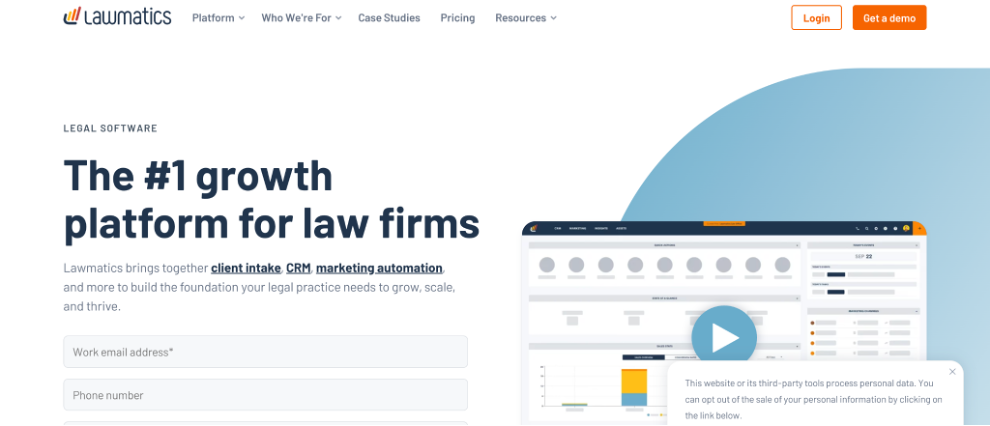
Lawmatics CRM streamlines follow-ups and appointment scheduling, saving staff time while improving response speed. Automated workflows help prioritize leads and convert more inquiries into consultations.
Key features: Combines CRM, email marketing, and automation for lead nurturing and client onboarding, all in one place
HubSpot

HubSpot allows law firms to connect website forms, email campaigns, and lead tracking in one system. The analytics tools help evaluate which campaigns are generating the best client conversions.
Key features: HubSpot Smart CRM combines automation, reporting dashboards, and integration capabilities with data enrichment options
Salesforce

Salesforce allows law firms to design workflows that match their intake processes and scale as the firm grows. Advanced reporting and AI features provide actionable insights for optimizing client acquisition strategies.
Key features: Highly customizable CRM for larger firms, combining sales, service, marketing, commerce, and IT on one integrated platform
Website optimization tools to convert more clients
A law firm’s website is often the first point of contact for potential clients. Optimizing it for speed, mobile, usability, and conversion helps your marketing efforts lead to tangible results. These tools help maximize engagement and convert visitors into consultations, ensuring every design and content element is optimized for performance.
Notable website optimization tools include:
FirmPilot
FirmPilot evaluates website performance and optimizes site structure to ensure your website is accessible, easy to navigate, and recommended to potential clients seeking legal services. Our system analyzes historical data to determine which visual and linguistic patterns are most effective for conversion.
Key features: AI-assisted website optimization for design, page load speed, SEO, and content
Hotjar
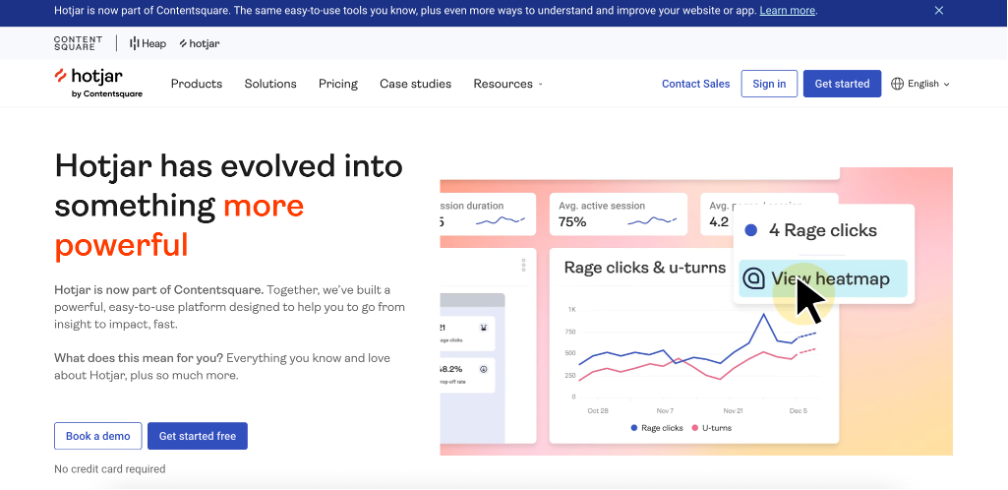
Hotjar provides visual insights into how visitors interact with pages, which elements attract attention, and where users drop off. This data informs design adjustments and content improvements.
Key features: Heatmaps and session recordings to analyze user behavior
Crazy Egg

Crazy Egg lets law firms visualize visitor interactions and run A/B tests to compare different layouts or button placements, revealing what drives engagement.
Key features: Heatmaps, scroll maps, and click maps
PageSpeed Insights
PageSpeed Insights evaluates load times, identifies bottlenecks, and suggests optimizations that keep visitors engaged. Faster pages not only enhance user experience but also improve search rankings.
- Key features: Monitors site speed and provides improvement recommendations
Lead intake and automation tools for faster conversions
Even the most polished marketing campaigns can struggle to deliver results if lead management isn’t handled efficiently. Lead intake and automation tools reduce friction and accelerate the conversion process. Automation ensures no lead is lost due to slow follow-up or manual processes, allowing your team to focus on high-value client interactions.
High-impact options include:
Lawmatics Intake
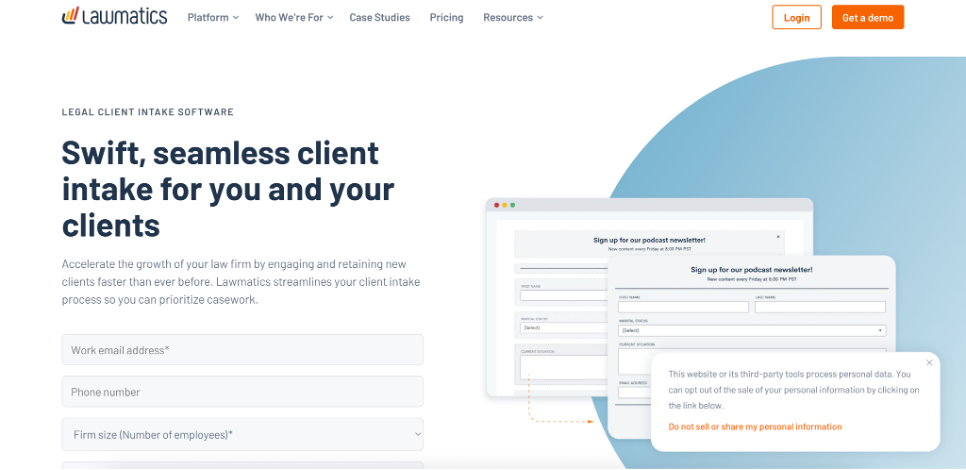
Lawmatics Intake collects client information quickly, routes leads to the right attorney, and triggers automated follow-up sequences. The intake software integrates with their CRM to automate the entire client journey.
Key features: Automates client intake, scheduling, and follow-ups
Clio Grow

Clio Grow includes forms and workflows that are designed to minimize barriers and maximize response speed. Integration with Clio Manage maintains continuity from lead to case opening.
Key features: Integrates intake with case management, streamlining the lead-to-client process
Typeform or Jotform

Both Typeform and Jotform are straightforward, customizable, mobile-friendly, and designed for a smooth user experience. Automation makes sure leads are captured accurately and immediately.
Key features: Flexible forms that feed directly into CRMs for automated data collection
Calendly

Calendly syncs with email calendars and allows clients to self-book appointments, cutting down on administrative work. Automated confirmations and reminders improve attendance rates.
Key features: Scheduling automation reduces barriers to booking consultations
Performance tracking tools for measurable results
Marketing data is only valuable when it informs action. Tracking tools reveal which campaigns deliver measurable results and where adjustments are needed. Integrating these tools with the rest of your stack provides visibility across all channels, making marketing efforts accountable and data-driven.
Important performance tracking tools include:
FirmPilot
FirmPilot analytics tracks which pages and keywords generate the best leads and recommends adjustments to maximize results. Real-time reports connect marketing efforts directly to client conversions.
Key features: Monitors SEO performance and lead generation, providing actionable insights for law firms
Google Analytics 4

Google Analytics helps law firms understand how visitors engage with their website, what content drives inquiries, and which campaigns produce tangible outcomes.
Key features: Tracks traffic sources, user behavior, and conversion metrics
Databox

Databox provides a visual overview of key performance indicators (KPIs) and allows teams to monitor performance in real time. It also supports custom alerts for trends or anomalies.
Key features: Combines metrics from multiple marketing platforms into a single dashboard
HubSpot Reporting
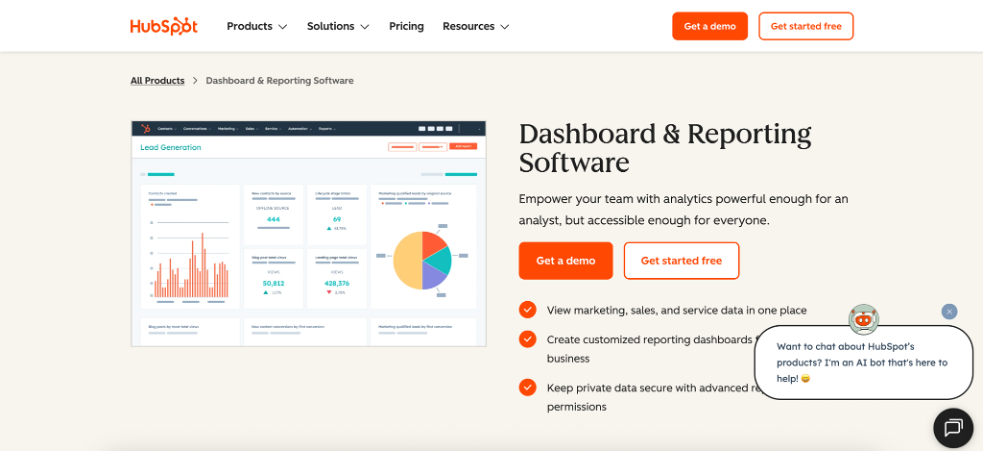
HubSpot’s advanced reporting tools track interactions with email campaigns, social media, and landing pages, giving firms insight into which marketing channels deliver the highest value.
Key features: Connects marketing activity to sales, and service data, showing tangible ROI
Build your law firm’s marketing stack with FirmPilot
Selecting the right law firm marketing tools is the first step in creating a high-performing, technology-forward stack.
FirmPilot stands out as an AI-powered SEO platform that helps law firms optimize their websites, content, and keyword strategy to attract qualified leads. Start with an SEO foundation using FirmPilot to build a marketing stack that’s data-driven and built for growth. Along with our website optimization, AI-powered social media, and strategic link-building tools, your marketing stack can become a fully integrated engine for attracting, converting, and retaining high-value clients.
FAQ
What are the best law firm marketing tools to use in 2025?
The best tools combine SEO, CRM, automation, and analytics. Platforms like FirmPilot, Clio Manage, Lawmatics, HubSpot, and Semrush stand out for helping firms improve visibility, manage leads, and measure ROI. A full stack ensures consistency across campaigns and client communications.
How do marketing automation tools help law firms attract more qualified clients?
Through automated keyword research, competitive intelligence, and cross-platform content publishing, marketing automation tools improve SEO performance, drive qualified website traffic, and convert more legal prospects into clients.
What is the difference between general marketing software and legal-specific marketing platforms?
Legal-specific tools, such as FirmPilot or Clio Grow, are built for compliance, include specialized legal workflows, and surface information law firms are looking for. General platforms may include additional layers of customization or workarounds. Using legal-focused systems improves efficiency and ensures every marketing action aligns with ethical and regulatory requirements.
How does AI-powered software like FirmPilot enhance a law firm’s marketing performance?
AI tools like FirmPilot analyze competitor data, recommend high-value keywords, and optimize site structure automatically. They bridge SEO, content strategy, and conversion tracking by giving firms actionable insights to outperform local competitors with less manual effort.
Why does lead intake optimization matter for modern law firm growth?
Optimizing intake ensures every inquiry is captured, routed, and receives a reply. Automation add-ons remove delays that cause lost leads, support 24/7 response capability, and integrate seamlessly with CRMs, which helps firms maintain client satisfaction and higher close rates.
How can performance tracking tools help measure marketing ROI for law firms?
Analytics platforms like FirmPilot, Google Analytics 4, and Databox connect marketing activity to real client actions. They show which campaigns, keywords, and content generate the most leads, allowing firms to refine budgets and focus on the highest-return efforts.
What should a complete law firm marketing tech stack include for maximum efficiency and results?
An ideal stack covers five layers: SEO and analytics tools, CRM and intake software, automation and scheduling platforms, website optimization, and reporting dashboards. Together, they provide end-to-end visibility, measurable performance, and scalable growth across every marketing channel.