
How do law firms attract more clients online? Clients searching for legal help online usually hire whoever they find first. Whether you’re a large firm, mid-size, or solo practitioner, your ability to grow depends on reaching the right people at the right time.
This guide covers the eight marketing workflows that drive the most client acquisition for law firms.
Each section gives you the strategic framework and key decisions to make, with links to dedicated guides that walk through implementation details for each tactic.
- SEO and local SEO: Create content and optimize your online presence so your firm ranks higher when clients search for legal services in your area.
- Keyword research: Identify high-intent search terms and create content optimized to rank for those keywords.
- On-page SEO and technical SEO: Structure your pages, headlines, and metadata to attract qualified traffic.
- PPC (Google ads and local service ads): Capture immediate leads through paid search while reinforcing your organic visibility.
- Link building and PR: Earn authoritative backlinks and media mentions that boost rankings and credibility.
- Website design and grading: Build a fast, mobile-friendly website that converts visitors into consultations, then use clear website grading to understand how to outperform competitors.
- Social media: Keep your firm top-of-mind with prospective and past clients through consistent engagement and targeted updates.
- Agency vs. AI strategies: Explore how traditional agencies compare to modern AI-driven marketing, so you can decide what’s right for your firm.
- ROI tracking: Measure performance across every channel to prove marketing impact and guide budget decisions.
How to use SEO to get more clients for your law firm
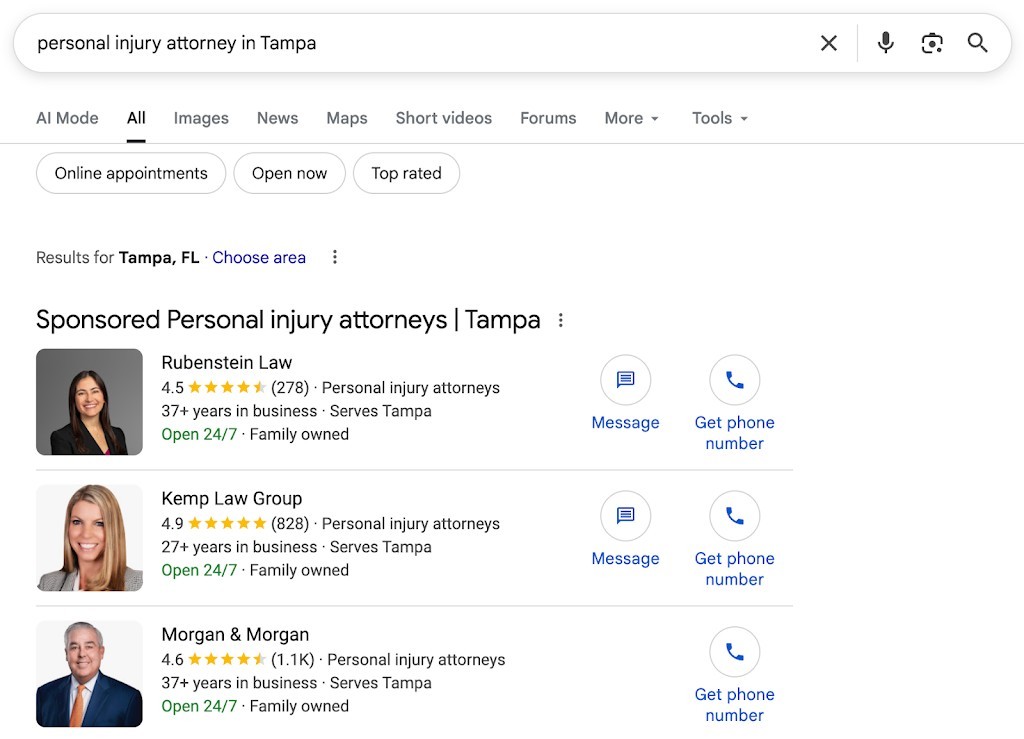
Search engine optimization puts your law firm in front of potential clients actively searching Google for legal help right now. When someone types “divorce lawyer near me” or “personal injury attorney in Tampa,” SEO determines whether they find your firm or the competition.
Here’s how to use SEO to get more clients for your law firm:
- Claim and optimize your Google Business Profile. Most legal searches trigger the map pack, i.e. those three businesses that appear before organic results. If your profile is incomplete or has the wrong category, you’re invisible. Add photos, verify your address, and pick the most specific legal categories available.

- Develop content around high-intent keywords. Instead of broad terms like “lawyer near me,” use phrases like “personal injury attorney in Tampa.” Target the exact problems your ideal clients are searching to solve.

- Write service pages for each type of practice. One page per service: DUI defense, child custody, estate planning. Each page should answer the exact questions someone in that situation is googling at 11 pm when they realize they need help. Each page should answer the specific questions someone in that situation is asking.
- Build location landing pages. If you serve multiple areas, you need content speaking directly to those regions. Copy-and-paste templates won’t work, and search engines can detect the difference. Unique, locally-relevant content signals to both Google and clients that you actually serve their community.
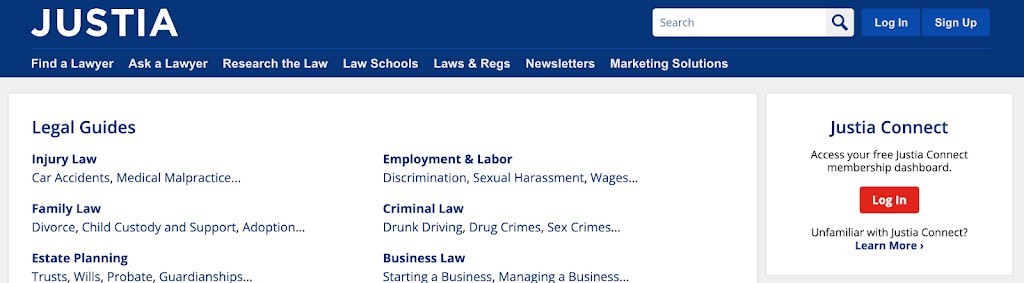
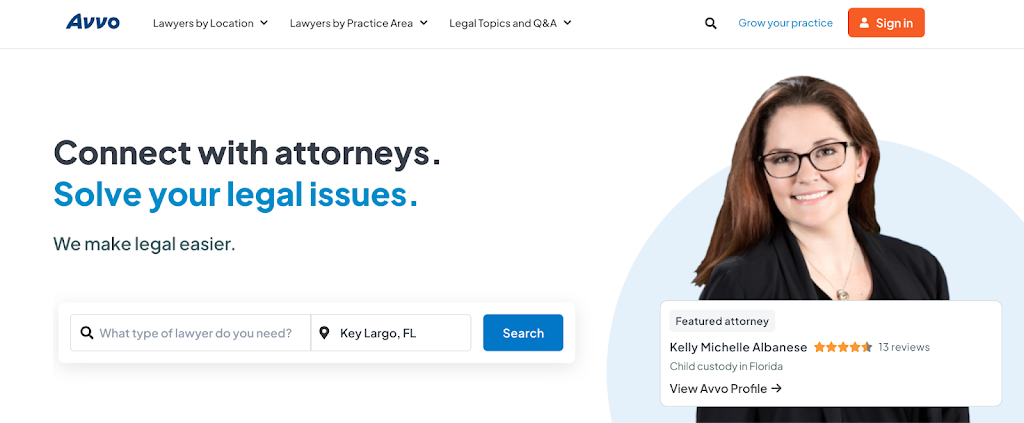
- Get listed on legal and local directories. Sites like Justia, Avvo, and your state bar boost your site’s trust. Google looks at these links to determine credibility. Consistent NAP (Name, Address, Phone) information across all directories strengthens your local SEO authority.
- Fast load speed and mobile usability. If your site takes more than a few seconds to load, the client might leave before requesting more information. Potential clients are looking for help sooner rather than later. Google also ranks mobile-friendly sites higher. Over 60% of legal searches happen on mobile devices. If your site doesn’t work on phones, you’re losing cases.
Unlike paid advertising that stops when your budget runs out, strong SEO keeps working; ranking higher, attracting more clients, and reducing your cost per case month after month.
Learn more: SEO for Lawyers: A Clear Path from Search to Signed Case
PPC advertising for law firms: How to generate leads with Google Ads
PPC advertising puts your law firm at the very top of Google search results, above all organic listings, so you reach clients at the exact moment they’re ready to hire. While SEO builds long-term visibility, PPC generates leads immediately and can significantly reduce case acquisition costs when you target the right keywords and track performance.
How to generate leads with Google Ads for your law firm:
- Use campaign segmentation to measure ad effectiveness. Set up separate ad groups for each practice area and continually test unique ad sets. This improves relevance and makes it easier to see which ads are performing best (or not performing at all). Segmentation also lets you allocate budget to your most profitable practice areas.
- Target high-intent search terms. Focus on queries like “hire divorce lawyer now” or “get legal help today.” These searches signal immediate need. Someone typing “need DUI lawyer tonight” is ready to convert, not just browsing. Match your ad copy directly to the urgency and specificity of these searches.
- Test responsive ad formats. Let Google automatically mix and match your headlines and descriptions to see what works best. Responsive ads adapt to show the most effective combination for each searcher, improving both your click-through rate and Quality Score without manual A/B testing.
- Enable call tracking. Many clients would rather call than fill out a form. Those calls need to be tracked and attributed accurately. Call extensions, click-to-call buttons, and dedicated tracking numbers tell you exactly which ads drive phone consultations. Often your highest-value leads.
- Run Google Local Service Ads for trust signals. Local Service Ads appear above even regular PPC ads, display the Google Guaranteed badge, and only charge per lead (not per click). They’re particularly effective for practice areas like family law, personal injury, and criminal defense where trust matters more than speed. LSAs require verification and background checks, which makes the Google Guaranteed badge valuable for risk-averse clients comparing multiple firms.
Learn how to set up and optimize Local Service Ads. - Watch your Quality Score. Google uses this to determine where and how often your ad is shown, and how much you pay per click. It’s a mix of your ad’s relevance, landing page experience, and expected click-through rate. Higher Quality Scores mean lower costs and better ad positions, making every dollar work harder.
For law firm marketing strategies seeking quick lead generation, PPC is often the front line. Target the right keywords, track everything, and optimize based on which campaigns actually bring in signed cases.
Learn more: Google Ads for Lawyers: The Modern Playbook for Lead Generation
Content marketing for lawyers: What to write to attract and convert clients
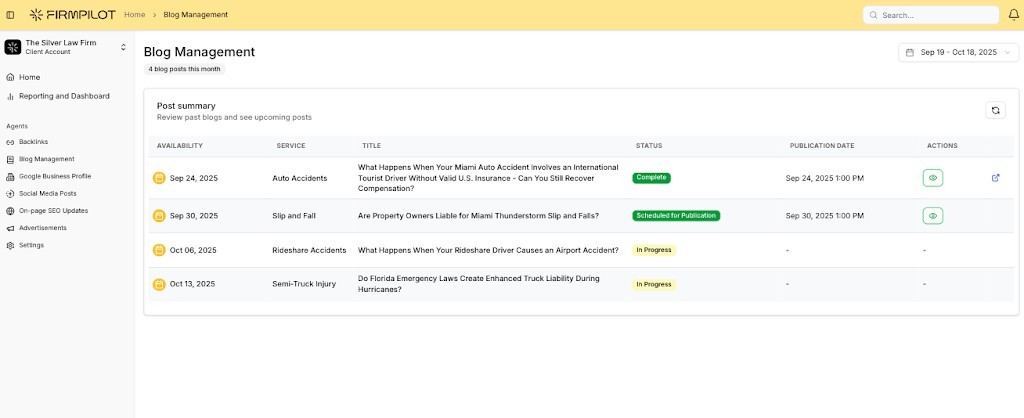
Content marketing answers the questions your potential clients are already asking, positioning your firm as the trusted authority before they ever pick up the phone. When someone searches “Do I need a lawyer for a first DUI?” and finds your comprehensive answer, you’ve already started building the relationship that leads to a signed retainer.
Here’s what to write to attract and convert clients through content marketing:
Write about client concerns, not legal theory. Blog topics should answer real questions like “Do I need a lawyer for a first DUI?” or “What happens at a custody hearing?” People searching Google are seeking clarity about their situation and whether they need help. Address their fears, confusion, and immediate needs in easy-to-understand language.
Create an effective content funnel. Blog posts attract prospective clients, pages with your offering convert that traffic to leads, and then FAQs help close the deal. Create an ecosystem of content so potential clients looking for legal representation keep coming back for the information you’re providing. Each piece should naturally guide readers deeper into understanding both their problem and your solution.
Include calls to action. Every piece of content should gently push readers to take the next step, whether it’s booking a consultation or learning more about what you offer. Making it easy to get in contact with you helps increase conversion. Place CTAs strategically throughout your content, not just at the end, so readers can act whenever they’re ready.
Use structured data markup. This helps Google understand what your page is about and may earn you special display features in search. Schema markup for FAQs, articles, and local business information can get your content featured in rich snippets, answer boxes, and knowledge panels. This increases your visibility and upping your credibility in search results.
Repurpose long-form content. A single blog post can become a social caption, an email snippet, and a short video. The more you show a potential client, the more they feel like they can trust you. One comprehensive article on custody modifications can fuel weeks of touchpoints across every channel where your clients spend time.
The best content marketing is framed around expertise, builds trust, and makes hiring your firm the obvious next step. Content attracts qualified leads 24/7 without additional ad spend.
How law firms use social media marketing to build trust and get referrals
Social media marketing keeps your law firm visible where potential clients spend hours every day as they scroll Facebook during lunch, check Instagram before bed, and browse LinkedIn between meetings. Even if it’s not your top lead source, it builds trust and helps position your firm as an active part of the local community. When someone finally needs a lawyer, they remember the firm they’ve been seeing consistently in their feed.
How law firms use social media marketing to build trust and get referrals:
Post real stories and build connections.
“We helped John get full custody of his daughter” beats “We’re experienced family law attorneys” every time. Social proof builds credibility faster than credentials.

Share legal tips and quick insights.
A simple video explaining “how bail works” can get shared, saved, and remembered. These kinds of legal marketing tips help position you as the go-to expert. Educational content exudes authority without coming across as a sales pitch, making it far more likely to be engaged with and shared organically.
Build a consistent posting rhythm.
Posting daily isn’t required, but posting regularly with value lets social media algorithms know your account is here to stay. A predictable schedule helps you stay top of mind. Consistency matters more than frequency. Three quality posts per week beats daily low-effort content every time.
Engage with comments and messages.
Potential clients may ask quick questions or need a faster response time to get help. Answering quickly and with value helps you become the go-to law firm ahead of the competition. Every comment is an opportunity to demonstrate your responsiveness and expertise publicly, influencing not just the commenter but everyone else watching.
Run small, targeted ad campaigns.
Boosting a high-performing post to your local area can stretch a small budget surprisingly far. Even $50–$100 can put your best content in front of local prospects who match your ideal client profile.
Social media works best for solo and small practices building referral relationships with past clients and community members. It is a game of nurturing referral relationships with past clients, other attorneys, and community members who can send business your way.
Email marketing for law firms: How to stay top of mind with leads and clients
Email marketing keeps your firm top of mind with leads who aren’t ready to hire today but will need a lawyer tomorrow, or six months from now. Unlike social media, where your content competes with endless distractions, email lands directly in their inbox. It’s one of the easiest legal marketing tips to implement and maintain, and it delivers some of the highest ROI of any marketing channel.
How to stay top of mind with leads and clients through email marketing:
Automate follow-up for form fills. If someone visited your site and didn’t schedule a call or meeting, a short follow-up series can re-engage them and keep you as their eventual choice of firm when the time comes. Most leads don’t convert on first contact. Automated sequences ensure you stay in front of them without manual effort from your team.
Segment by audience. Past clients, referral partners, and active leads all have different needs. Customize your messaging so you’re delivering the right, valuable information to the people who need it the most. A past client might appreciate case law updates relevant to their situation, while an active lead needs educational content that builds trust and moves them toward hiring you.
Send simple, helpful updates. A monthly newsletter with 2–3 short sections is enough. Legal tips, firm news, a bit about how you can help, and one clear CTA. Overcomplicating your emails reduces open rates and engagement. Keep it scannable, valuable, and action-oriented.
Re-engage lost leads. Use email to reach out to leads that went cold with a gentle “Still need help with [topic]?” message. Timing matters in legal decisions. Someone who wasn’t ready three months ago might be actively searching for representation now.
Track performance. Open rates, click-through rates, and unsubscribes tell you what’s working and what isn’t. Use this data to refine subject lines, adjust send times, and improve content relevance. The emails that get opened and clicked are telling you exactly what your audience cares about.
The most effective email marketing feels like staying connected with someone who genuinely wants to help. When executed well, email nurtures relationships that turn into consultations, referrals, and long-term client loyalty.
How FirmPilot helps law firms generate more clients with AI-powered marketing
FirmPilot delivers measurable results on digital marketing campaigns so you know what’s working and what’s not. No guessing, just data-backed research and strategy.
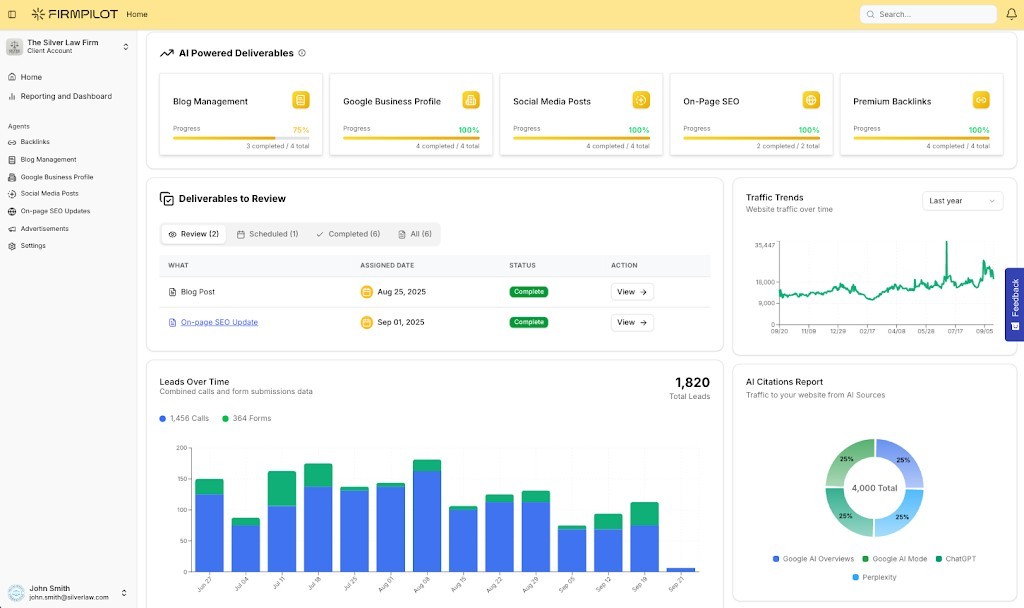
SEO keeps your firm visible when potential clients search for legal help and ahead of competitors in search results. Our AI engine automates keyword research, content creation, campaign tracking, and performance analysis, so your team can focus on winning cases.
Book a free demo today to see how FirmPilot’s AI engine will help your entire team secure more clients and larger case volumes.

FAQ
How much should a law firm spend on marketing?
Allocate 7-10% of gross revenue to marketing. Newer firms should invest 10-15% during their first 2-3 years. A solo practitioner earning $300,000 annually might budget $21,000-$30,000, while established firms can maintain growth at the lower end of this range. Budget typically splits as 40-50% for PPC, 25-35% for SEO and content, 15-20% for website and tech, and 5-10% for traditional marketing. FirmPilot helps maximize your budget by showing exactly which channels drive the highest ROI.
What’s the most effective marketing strategy on a tight budget?
Local SEO and Google Business Profile optimization often generate 3-5x more leads per dollar than paid advertising. Start by claiming your Google Business Profile, optimizing for “[practice area] attorney in [city],” and building citations on legal directories like Justia and Avvo.
Start by claiming your Google Business Profile, optimizing for practice-specific keywords like “estate planning attorney in [city],” and building citations on legal directories. Publishing 2-4 blog posts monthly that answer real client questions builds authority without ongoing ad costs. FirmPilot’s AI engine identifies the fastest path to visibility based on your specific market.
How long does law firm SEO take to show results?
Most law firms see measurable improvements within 3-4 months, with significant lead generation beginning around month 6-8. Local SEO for less competitive practice areas may show results faster, while highly competitive fields like personal injury can take 9-12 months for first-page rankings. Quick wins like Google Business Profile optimization can generate leads within weeks, while competitive keyword rankings require sustained effort. The timeline depends on your site’s current authority, local competition, and content quality.
Is PPC advertising worth it for small law firms?
Yes, when executed strategically. PPC delivers immediate visibility for high-intent searches like “hire DUI lawyer tonight” or “divorce attorney consultation.” Small firms compete effectively by focusing on hyper-targeted keywords rather than outbidding larger competitors on broad terms. Start with a small amount monthly in one practice area, track cost per lead, and scale what converts. Many firms find 2-3 practice areas generate 80% of profitable PPC leads. FirmPilot’s campaign segmentation shows which practice areas deliver positive ROI so you can double down on what works.
What’s the difference between SEO and PPC for law firms?
SEO builds long-term organic visibility without ongoing costs per click, while PPC delivers immediate top-of-search placement but requires continuous ad spend. Most successful firms use both: PPC for immediate leads while SEO builds, then gradually shift budget toward organic as rankings improve.
How do I know if my law firm marketing is working?
Track three core metrics: cost per lead, lead-to-client conversion rate, and return on ad spend (ROAS). If you spend $3,000 monthly and generate 15 qualified leads, your cost per lead is $200. If 3 become clients worth $5,000 each, your ROAS is 5:1, which is healthy for most practice areas. Monitor which channels drive the highest-quality leads, not just the most leads. A channel with expensive leads that convert at 30% beats cheap leads converting at 3%. FirmPilot provides clear dashboards showing traffic, leads, and conversions.
Should law firms optimize for AI search engines like ChatGPT?
Yes. AI-powered search through ChatGPT, Perplexity, and Google AI Overviews now influences how potential clients discover attorneys. These systems prioritize content that directly answers questions with clear, factual information rather than promotional messaging. Optimization for AI search (generative engine optimization or GEO) requires shifting from keyword targeting to conceptual territory ownership, becoming the definitive source on your practice area through comprehensive, authoritative content. FirmPilot specializes in GEO strategies that get your firm cited by AI engines while maintaining strong traditional SEO performance.
What are the biggest law firm marketing mistakes to avoid?
The costliest mistake is spreading budget too thin across every channel instead of dominating 2-3 that match your practice. A $2,000 monthly budget split across SEO, PPC, social, email, and traditional advertising accomplishes nothing. That same budget focused on local SEO and targeted PPC generates real results. Other errors include neglecting mobile optimization (70% of legal searches happen on phones), using generic website copy, ignoring Google Business Profile reviews, running PPC without proper tracking, and creating content about what interests you rather than what clients search for.