
SEO for lawyers is one of the most powerful digital marketing channels for growing your caseload and attracting better-fit clients without paying for every lead. From high-stakes practice areas like criminal defense and personal injury to competitive metros, law firms that rank high in search results generate more calls, consultations, and signed cases.
SEO ensures your firm shows up when and where potential clients are asking legal questions or comparing attorneys.
In this guide, you’ll learn:
SEO for lawyers refers to improving your law firm’s online visibility without paying for ads. It’s about showing up on all the platforms where potential clients seek legal help before contacting a firm.
Traditionally, Google has been the primary focus of law firm SEO services; however, as more people use conversational AI platforms, like ChatGPT, your firm must be visible everywhere they’re seeking answers.
Effective law firm SEO includes a mix of strategies like:
It’s also about establishing trust by showcasing your expertise, client reviews, and credentials online.
SEO’s advantage over ads as a marketing channel is that the results compound over time. For instance, a helpful guide you publish today can be found by potential clients for many years, bringing in more calls, inquiries, and qualified clients to your firm.
Most people do a lot of research before hiring a lawyer. For some practice areas, your potential clients could consider getting legal help for many months (or years) before they decide to call a firm.
During this time, they’re searching for answers to questions online. If your firm isn’t visible in those moments, you miss the opportunity to connect with high-intent clients, and they’ll likely contact another practice instead.
Since SEO relies on earned visibility (unlike ads, which get you paid visibility), people trust the firms that appear in organic results more than those that appear in the ads.
It’s also easier to sign clients on from SEO, compared to those who find you via ads, because they’re generally much closer to making a decision and have already spent time researching their legal issue.
Hiring a lawyer is rarely an impulse decision. Most people take time to research their legal issue, weigh their options, and seek multiple recommendations or reassurance before they call a firm.
At FirmPilot, we’ve built a proprietary AI system that analyzes thousands of real search queries, content patterns, and behavior signals across the legal industry.
We’ve found that potential clients follow a predictable search journey, and SEO plays a critical role in making law firms visible at each stage of the prospective client’s search journey.
FirmPilot uses AI to monitor these patterns across platforms and align your content with what real clients search for at every step of their decision-making process.
This ensures your firm isn’t just showing up online, but in the right way, at the right time, with the right message.
What follows is key to launching an effective SEO strategy. Following these best practices can help you attract more clients across multiple practice areas and build long-term visibility online.
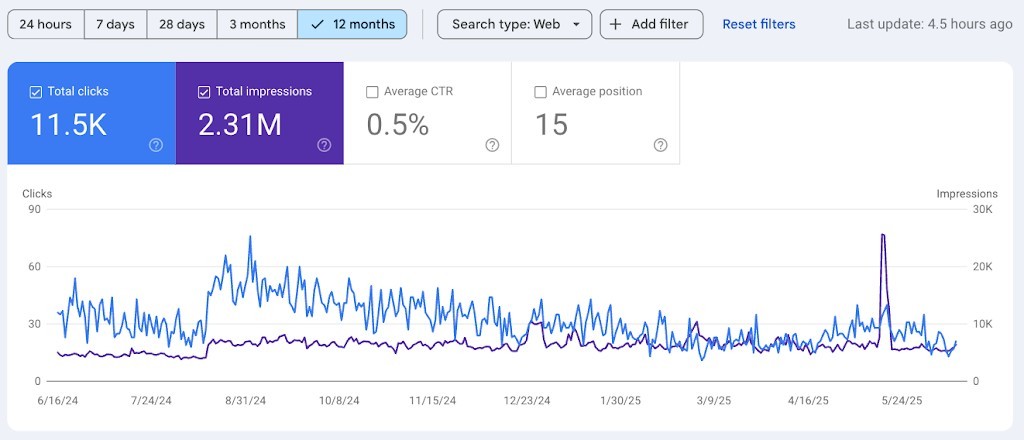
Begin with a baseline audit. You can use tools like Google Search Console to check how visible your firm has been in Google’s Search results:
If you don’t already have this set up for your website, you could use a free alternative like Ahrefs’ Webmaster Tools instead.
Check out how many impressions, clicks, and queries you’re showing up for organically on Google. This will give you an idea of your current visibility, where people are already searching.
The technology for determining whether your firm appears in ChatGPT (and similar large language models) is still new and is actively being developed by various companies.
One example is Ahrefs’ Brand Radar, which can show you what AI queries your firm shows up for in Google’s AI Overviews, ChatGPT, Perplexity, and more.
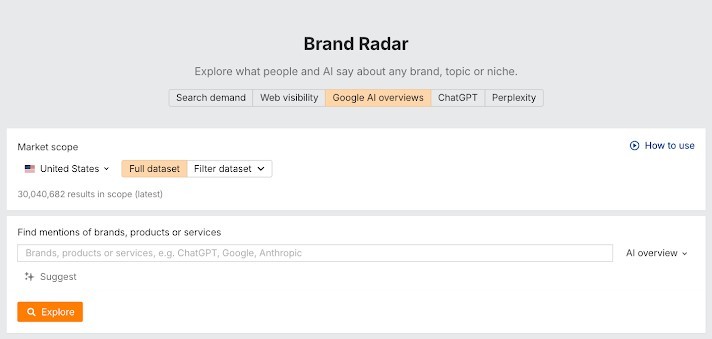
It’s worth checking what types of queries and conversations your firm shows up for in AI responses. Perhaps more importantly, however, it’s also crucial to see what these AI responses say about your firm.
AI tools often get details wrong, especially about local businesses. Most consumers can’t tell when this information is inaccurate, so it’s important to monitor how your firm is represented across AI-generated responses.
Local SEO is a must-have for every law firm. It’s how people in your city can discover your firm through maps and in search engine results.
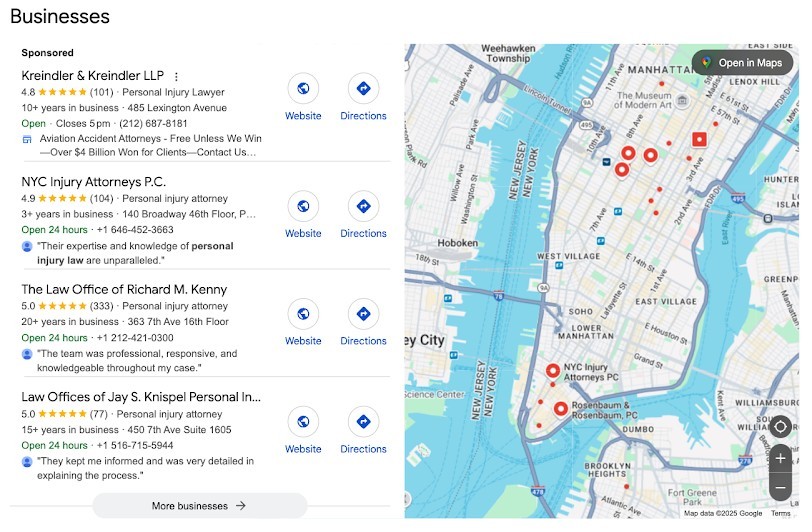
If you want people to call you directly from Google, you must set up a Google Business Profile. It looks like this:
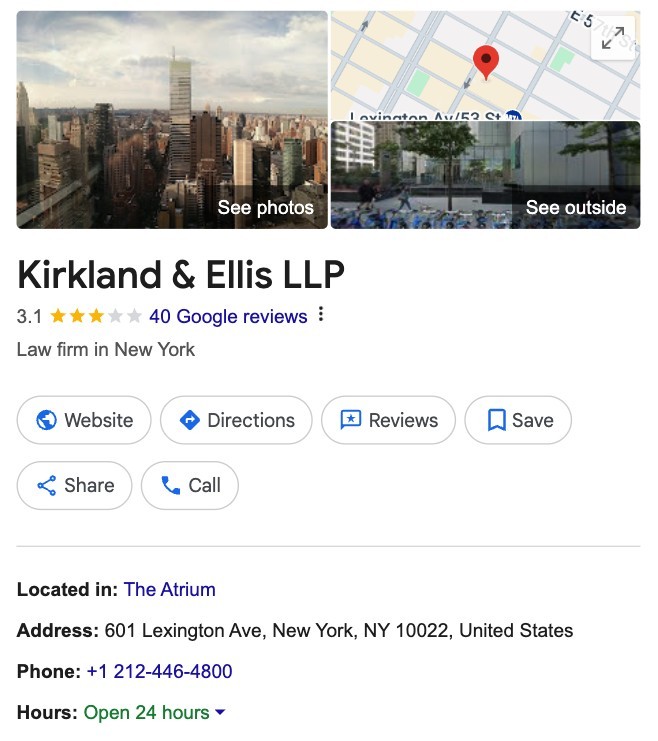
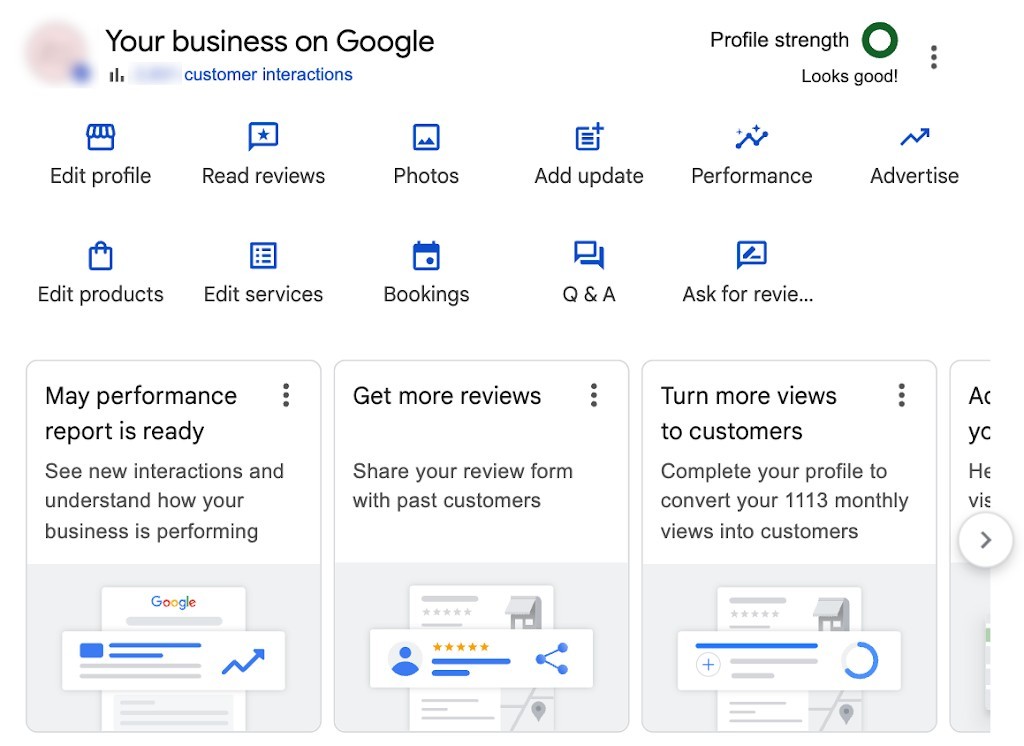
Pay particular attention to:
You can also go through a similar process to get your business listed in Apple Maps and Bing Places.
Once you’ve set up your profiles, you will want to build up your online citations (other websites mentioning your exact name, address, and phone number). Search engines use consistent citations as a trust signal. The more accurate and widespread your citations, the more likely your firm is to appear in local search results when potential clients look for legal services.
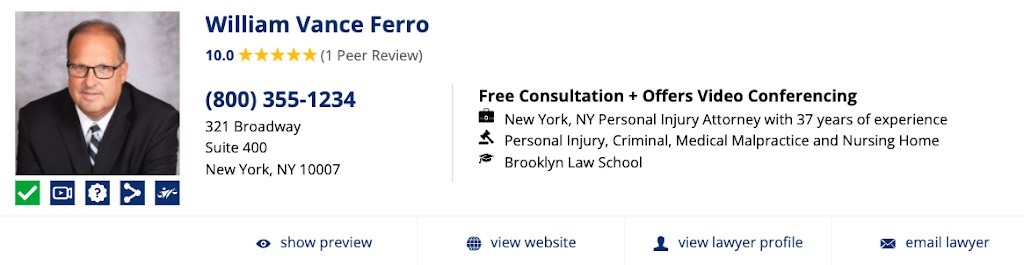
This is an excellent example of a lawyer citation. It includes all pertinent information, a 5-star ranking, and full details on the attorney’s background and practice areas.
Many free directories work like online business cards with essential information about your law firm that then link back to your website.
For instance, consider law-specific platforms like Justia, Avvo, and Find Law. You could also get featured on general local business directories like Yelp or Yellow Pages.
Lastly, check your website for local visibility. In general, your name, address, and phone number should be visible in the footer, contact us page, and dedicated location landing page.
This is especially helpful for firms with multiple offices. A dedicated landing page per office will allow you to embed a Google map showing your office’s location and add unique opening hours, parking information, and other localized information.

You can also showcase the team members working there, so local clients know what to expect before they set foot in your office.
Next, you’ll want to assess the content you have on your website and whether there are any gaps or new content opportunities that can earn you more visibility online.
With FirmPilot, you can take the guesswork out of this entire process. Our workflow is designed to show you how your content is performing and to help you plan out new topics easily:
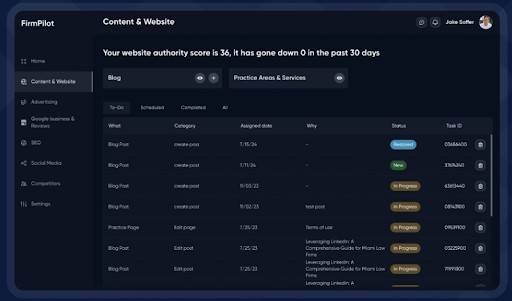
Our AI model has been custom-trained to deliver data-driven insights about your brand and competitors. It works by analyzing rival firms’ content against yours to identify:
Since FirmPilot is an all-in-one solution, we can eliminate the guesswork in your keyword and content strategy. From finding the keywords with the best potential for your success to planning content pieces to target them, we automate it all for you.
You could also use traditional SEO platforms like Ahrefs to find quick-win opportunities and gaps against your competitors.

However, it will be a more manual process that requires you to know a bit about SEO strategy and how to turn data into the right actions that will increase your visibility online.
Backlinks have been an essential cornerstone of SEO success since Google launched. They are hyperlinks from other websites to yours.
They earn your brand visibility on other websites and media publications when done well.
Traditionally, getting your brand mentioned in a publication (without getting a link to your website) did not help much with SEO visibility since search engines follow hyperlinks to determine what websites are authoritative, trusted, and popular.
But now, with AI, all mentions of your brand (linked or unlinked) help build up your credibility.

These mentions act as trust signals. You can wait and earn mentions naturally. You can also actively pursue online PR opportunities to get your name out there in publications your target audience reads.
Some ways to get more links include:
Aim for quality and relevance over quantity. One link from a trusted publication beats 20 from low-quality, irrelevant websites.
FirmPilot removes the guesswork from identifying high-quality link opportunities. It can also automate your outreach efforts by contacting those websites and opening up the door for a partnership or collaboration that can earn you links.
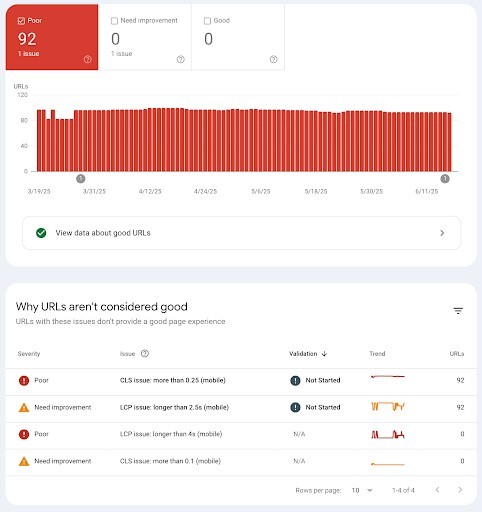
Even the best strategy can stall if your website has performance issues that frustrate users or hurt your rankings. Users (and search engines) prioritize fast, mobile-friendly, secure websites.
With FirmPilot, you can see exactly where your website might fail to deliver a good experience, whether due to slow-loading pages or technical issues.
You can also use free tools like Google Search Console, Bing Webmaster Tools, or Ahrefs Webmaster Tools to get detailed reports of technical issues that you (or your development team) can fix.
You’ve now seen what it takes to succeed with SEO as a law firm, from appearing in organic search to dominating local listings and earning trust online. But doing all this manually takes time most lawyers don’t have.
That’s where FirmPilot comes in.
FirmPilot is an AI-powered platform built specifically for law firms. It automates every stage of the SEO process (audits, keyword research, content planning, technical fixes, link outreach, and more) so you can stay focused on your clients while your visibility grows in the background.
It’s like having a dedicated SEO strategist, content team, and technical expert in one intelligent dashboard.
Book a free demo and discover how easy it is to turn more Google searches and ChatGPT questions into signed clients.