
Local SEO helps your law firm show up when potential clients search for terms like “divorce lawyer near me” or “best personal injury attorney in [city].” It’s how local clients find you, and if your firm isn’t showing up, someone else is.
When your firm ranks high in local search results or appears in Google’s map pack, you’re far more likely to get calls, consultations, and new cases. In fact, 71% of people looking for a lawyer say it’s important to have a local attorney.
The good news? Ranking locally doesn’t require a huge budget — just the right strategy. In this post, you’ll learn how to boost your local visibility through practical, step-by-step tactics. We’ll also show how FirmPilot helps law firms stay consistent and effective with their local SEO efforts over time.
You’ll learn how to:
Local SEO for law firms is the process of improving your firm’s visibility in local search results, especially the Google Map Pack, Local Services Ads (LSAs), and organic listings for geo-specific legal queries.
Think: “best injury attorney in [city]” or “divorce lawyer near me.” You want to show up #1 here: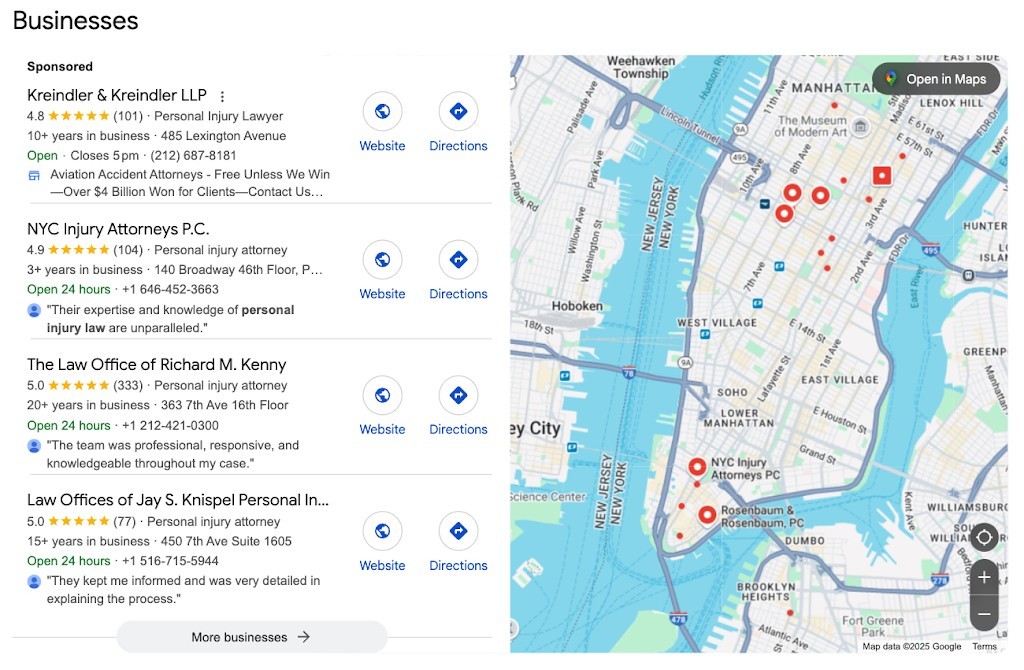
When someone types those searches into Google or even asks ChatGPT for a local recommendation, the firms that show up first get the call. These aren’t random results. They’re earned through consistent local SEO efforts.
That’s why local SEO is no longer optional. It’s how legal clients find and choose firms before they ever speak to a lawyer. And it’s how your competitors are quietly closing cases day after day.
Your Google Business Profile (GBP) should be the foundation of your law firm’s SEO strategy. It’s the top factor influencing whether your firm appears in the local map pack, yet it’s often treated like a one-time task.
Claiming and verifying your profile is just the beginning. To rank well and attract more clicks, your profile needs to signal authority, trust, and relevance to both Google and potential clients.
Here’s how to do it right:
When fully optimized, your GBP tells Google that your firm exists, and it shows why you’re the top choice in your city or region. It’s your first and best opportunity to make a great local impression.
Next, check your website’s local landing pages. These tell potential clients why they should work with you instead of a rival firm in your area.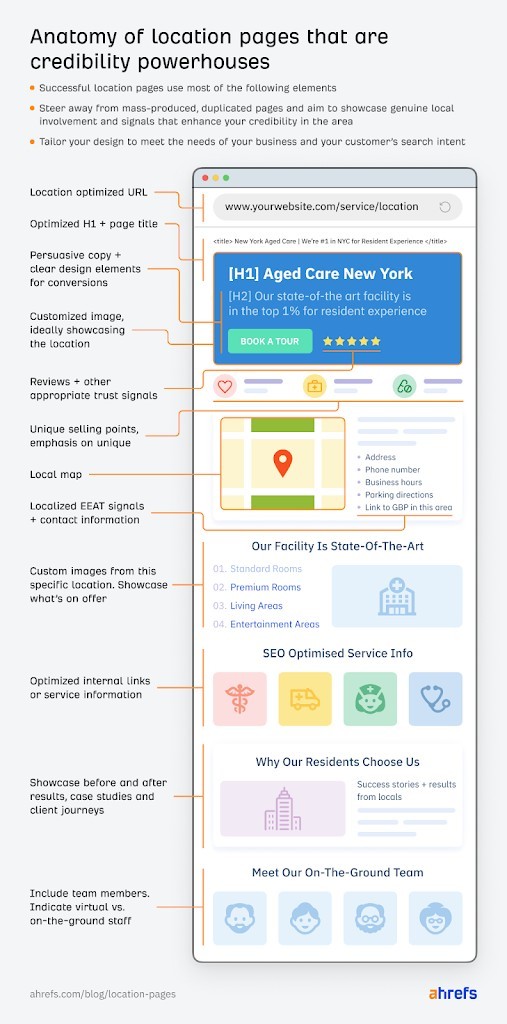
This is where many firms struggle. They copy and paste one location page, swap out the city name, and expect it to rank. But Google is smarter than that. It can tell when a page is duplicated with no real local value, and it won’t reward it with top rankings.
Here’s what high-performing local pages include:
When done right, these location pages support your local SEO efforts and convert better, too. That’s because they show visitors you genuinely serve their area, not just rank for it.
FirmPilot helps automate this process by building unique, SEO-friendly local pages tailored to your practice areas and target cities.
Once your Google Business Profile and local pages are in place, it’s time to reinforce that trust and authority across the web. That’s where citations and directory listings help.
Think of these like online business cards. They often look like this:
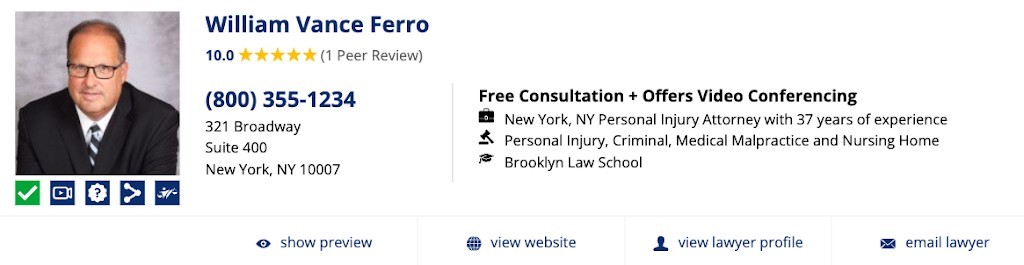
Start with the big legal directories like Avvo, Justia, FindLaw, and Lawyers.com. Then branch out to mainstream and local directories like:
The most common mistake law firms make here? Inconsistent NAP information across profiles.
Even small formatting differences (like “St.” vs. “Street” or missing suite numbers) can dilute your local authority in Google’s eyes. Here’s how to get it right:
At FirmPilot, we integrate automated citation management into your local SEO workflow, so you can focus on your practice while we ensure your listings stay accurate, optimized, and consistent across the board.
Want to appear above the map pack and organic results? That’s what Google Local Services Ads (LSAs) offer but only if you’ve earned the Google Screened badge.
This badge shows potential clients that you’ve passed Google’s background checks and license verification. It builds instant trust and boosts visibility.
It matters because you’ll get:
To get the Google Screened badge, you’ll need to complete an identity and license check through Google’s LSA partner. You’ll also need to submit insurance details (depending on your practice areas) and maintain positive reviews and a strong reputation.
Only a small percentage of law firms have this badge, which makes it a standout opportunity. At FirmPilot, we help streamline this process and keep your profile competitive.
Nothing builds trust faster than real client feedback. When someone searches for an attorney, reviews are often the deciding factor, especially for high-volume terms like “employment lawyer with great reviews near me.”
Great reviews boost your local rankings, improve click-through rates, and help clients feel confident before they even speak with you.
We help our clients earn reviews consistently:
Generic “how-to” articles of high-level answers to situational questions won’t cut it for local SEO. You need content that proves you’re embedded in the community, not just across the country.
Here’s how you can do that:
This localized depth moves the needle with both Google and potential clients. FirmPilot’s AI can help you uncover the most resonant hyper-local topics at scale. We do this by analyzing what’s working for your competitors and reverse engineering the best local content for you to publish.
Backlinks are a top-ranking factor, but for local SEO, where the link comes from matters just as much as getting one.
You don’t need mentions from Forbes. You need links from trusted local sources that prove you’re part of the community.
High-value local link sources include:
These links point to your location pages or local blog content and send strong proximity signals to Google.
FirmPilot identifies local backlink opportunities based on your practice area and region. Our proprietary AI system can then help you go after them efficiently, without cold pitching every newspaper in town.
Social media activity won’t directly improve your local map ranking, but it does help validate your presence in the community. Google looks at signals from across the web to confirm that your business is legitimate and locally active.
What matters most isn’t follower count or viral reach. It’s consistency and relevance. Posting updates, engaging with local events or organizations, and sharing client success stories show that you’re active and trusted in your area.
That ongoing visibility helps strengthen your broader digital footprint and reinforces your local authority, especially when your business info (name, address, and phone number) is consistent across platforms.
Executing this local SEO strategy is effective, but doing it consistently requires time and focus.
That’s where FirmPilot helps. We automate key steps, from GBP and citations to landing page creation and performance tracking, so your firm appears higher, more frequently, without the manual effort.
Whether you do it in-house or want expert support, the important thing is to start. Each month you wait, another firm is gaining ground in your market.
If you want to automate your local SEO efforts, book a free strategy call with FirmPilot. We’ll audit your current presence automatically and show you your biggest growth opportunities.